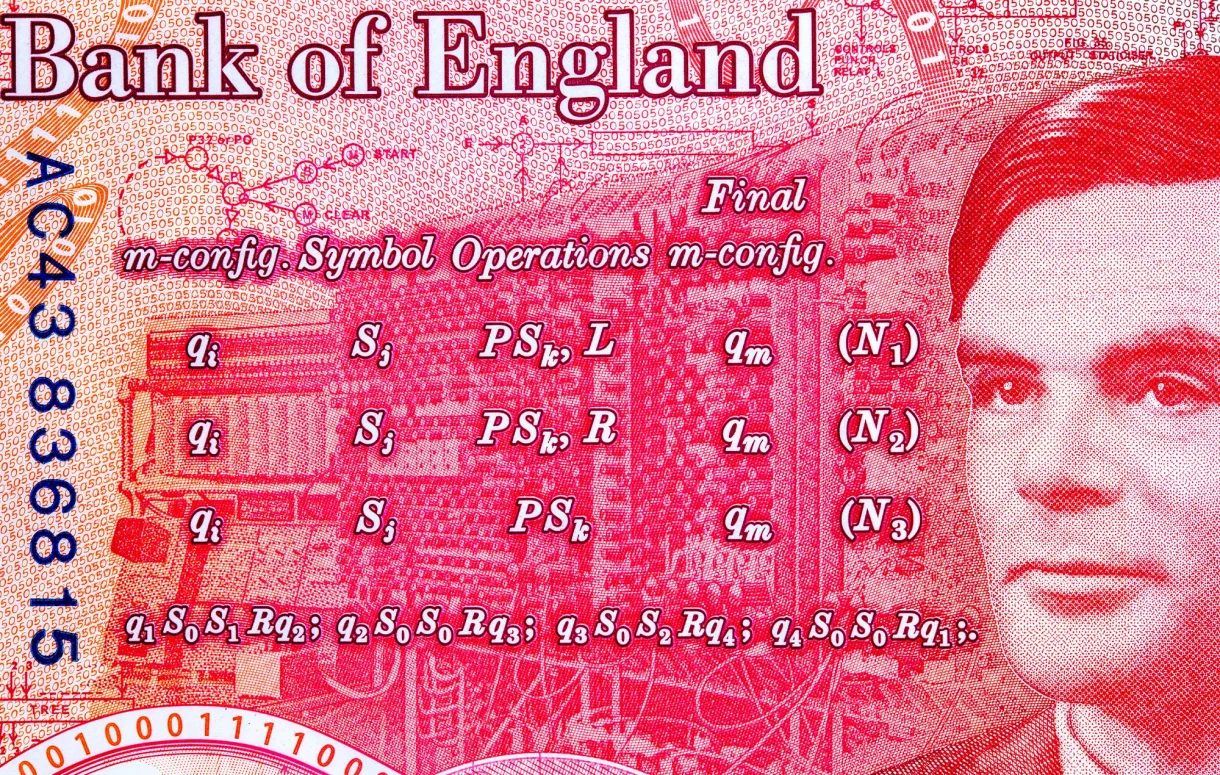
One hundred years after Alan Turing arrived in Sherborne, his remarkable legacy gives us a chance to think about human imagination, technological progress and the freedom to see things differently.
In 1926, a thirteen-year-old boy arrived at Sherborne School with an extraordinary gift for mathematics, an enquiring mind and a way of looking at the world that would eventually change it. His name was Alan Turing.
A century later, it is hard to overstate the impact of the ideas that began taking shape during those early years. From the computers on our desks to the phones in our pockets, the digital world owes an enormous amount to Turing’s pioneering work. His role in breaking the Enigma cipher during the Second World War is rightly celebrated, but his influence reaches much further.
His thinking helped lay the foundations for modern computing and, in his famous 1950 paper, Computing Machinery and Intelligence, he asked a question that still occupies some of the brightest minds in science and technology today:
Can machines think?
It feels like a particularly relevant question now. Artificial intelligence is becoming part of everyday working life, including ours at Lolly, and we’re fascinated by what it can do. It can help us explore ideas, organise information, solve problems and open up possibilities that would have seemed extraordinary not very long ago.
But the more sophisticated the technology becomes, the more interesting the human part becomes too.
Imagination.
Curiosity.
Instinct.
Judgement.
The confidence to challenge accepted thinking. The unexpected idea that comes from looking at something in a completely different way. Those qualities still matter enormously.
There’s something especially powerful about looking at those qualities through the life of Alan Turing. His achievements came not only from exceptional intelligence, but from an independence of thought that allowed him to see possibilities others had not yet imagined.
His story also reminds us that brilliance and individuality do not always sit comfortably within the conventions of their time. Turing was a gay man living in a society that criminalised his sexuality, and his life was shaped by attitudes that, thankfully, Britain has since worked hard to confront and change.
Recognising that does not take anything away from his extraordinary achievements. It simply helps us understand the whole person behind them. His legacy belongs not only to mathematics, computing and scientific discovery, but also to the history of LGBTQIA+ equality.
That connection feels particularly meaningful to us here in Sherborne. We’ve been proud supporters of Sherborne Pride since the beginning, helping create its identity and championing what it stands for: a community where people are free to be themselves.
Different people bring different perspectives. And those different perspectives make communities richer, businesses better and creative work far more interesting. Which is one of the reasons The Turing Project feels so exciting.
Its ambition to establish a centre for digital education, innovation and enterprise in Sherborne creates a wonderful connection between an extraordinary chapter in the town’s past and the possibilities of its future. It is more than a celebration of one remarkable person. It has the potential to encourage a new generation to be curious, ask questions, explore ideas and discover what might be possible.
For a creative agency lucky enough to call Sherborne home, there is something rather special about that.
We work in a world Turing helped make possible, in a town that played a part in his story, at a moment when technology is once again changing how we live, work and create.
One hundred years after he arrived in Sherborne, perhaps the most meaningful way to celebrate Alan Turing is not simply to look back at how far his ideas have taken us. It is to make space for the people who might think differently next.
Because somewhere in a Sherborne classroom today, there may well be another extraordinary mind wondering why things have to be done the way they have always been done.